Hormel Foods to buy premium deli meat company Columbus Manufacturing for $850 million

Hormel Foods Corp. said on Tuesday that it’s entered a definitive agreement to buy Columbus Manufacturing Inc. in a deal valued $850 million. The deal will increase Hormel’s position in the premium, authentic deli meat business the company said. Columbus Manufacturing is a Chicago-based premium deli meat company with annual sales of about $300 million, and is expected to grow at a rate of more than 5% a year. Hormel said in a news release that it expects the acquisition to be modestly accretive to per-share earnings in fiscal 2018, and full-year accretion in 2019 is expected to by between 6 cents to 8 cents per share. “This acquisition significantly enhances our scale in the deli by broadening our portfolio of products, customers and consumers,” said Hormel Chief Executive Officer Jim Snee in a statement. “Columbus is capitalizing on one of the fastest-growing areas in the retail grocery store with premium, authentic products that are on-trend with today’s consumers who are looking for unique experiences, flavors and products.” Hormel Foods said it will provide further commentary on the deal during a conference call at 9 a.m. Eastern. Shares of Hormel were inactive in premarket trade, but are down more than 13% in the year to date. By comparison, the S&P 500 index is up 15% and the Dow Jones Industrial Average is up more than 18%.

Market Pulse Stories are Rapid-fire, short news bursts on stocks and markets as they move. Visit MarketWatch.com for more information on this news.

…read more

From:: Stock Market News

Mortgage Layoffs Pick Up Steam

As interest rates continue to drift higher, an acceleration of layoffs in real estate finance is taking place. Two companies are closing their mortgage divisions.

New York Community Bancorp laid off 210 mortgage employees, according to a filing made with the Ohio Department of Job & Family Services

The filing was made as required by the Worker Adjustment and Retraining Notification Act, which is required when at least 50 employees are impacted.


…read more

From:: Financing

Sanmina shares fall on earnings miss, outlook

Sanmina Corp. shares declined in the extended session Monday after the electronics manufacturing services provider’s quarterly results and earnings outlook fell short of Wall Street estimates. Sanmina shares fell 7% to $36.10 after hours. The company reported fiscal fourth-quarter net income of $25.8 million, or 33 cents a share, compared with $100.8 million, or $1.30 a share, in the year-ago period. Adjusted earnings were 64 cents a share. Revenue rose to $1.76 billion from $1.67 billion in the year-ago period. Analysts surveyed by FactSet had estimated 76 cents a share on revenue of $1.75 billion. For the fiscal first quarter, Sanmina estimates earnings of 68 cents to 72 cents a share on revenue of $1.75 billion to $1.8 billion. Analysts had forecast earnings of 78 cents a share on revenue of $1.76 billion.

Market Pulse Stories are Rapid-fire, short news bursts on stocks and markets as they move. Visit MarketWatch.com for more information on this news.

…read more

From:: Stock Market News

Rent-A-Center to explore ‘alternatives’, posts quarterly loss

Shares of Rent-A-Center Inc. reversed course late Monday to rise 3.3% after the company said its board of directors was exploring “strategic and financial alternatives” to turn the company around, with J. P. Morgan investment bankers serving as financial advisers. The company has suspended its dividend until the process is concluded, it said. In a separate statement, Rent-A-Center said it lost an adjusted $8 million, or 15 cents a share, versus earnings of $5.9 million, or 11 cents a share, in the year-ago period. Revenue fell to $644 million in the quarter, compared with $694 million a year ago. Analysts polled by FactSet had expected the Plano, Texas, company to report an adjusted loss of 3 cents a share on sales of $649 million. The stock ended the regular trading day up 5.8%.

Market Pulse Stories are Rapid-fire, short news bursts on stocks and markets as they move. Visit MarketWatch.com for more information on this news.

…read more

From:: Stock Market News

Apple closes at record high, market cap tops $860 billion

Apple Inc. rose to record highs Monday as optimism grew for an earnings report later this week that should give early indications about sales and deliveries of its newest iPhones. Apple stock hit new intraday highs and closed up 2.3% at $166.72, its first record closing high since Sept. 1. As of the end of trading, Apple’s market cap was $860.1 billion, easily the highest for a U.S. company. Apple’s closest competitor in valuation is Google parent Alphabet Inc. , which topped $700 billion for the first time last week. Analysts still believe Apple could move higher, as they have an average price target of $179.28, according to FactSet, 7.5% higher than Monday’s closing price.

Market Pulse Stories are Rapid-fire, short news bursts on stocks and markets as they move. Visit MarketWatch.com for more information on this news.

…read more

From:: Stock Market News

First-Time Homebuyers Are Knocking: Are They Being Let In?

By Susanne Dwyer

First-time homebuyers are eager to enter the housing market. Getting in the door is another story.

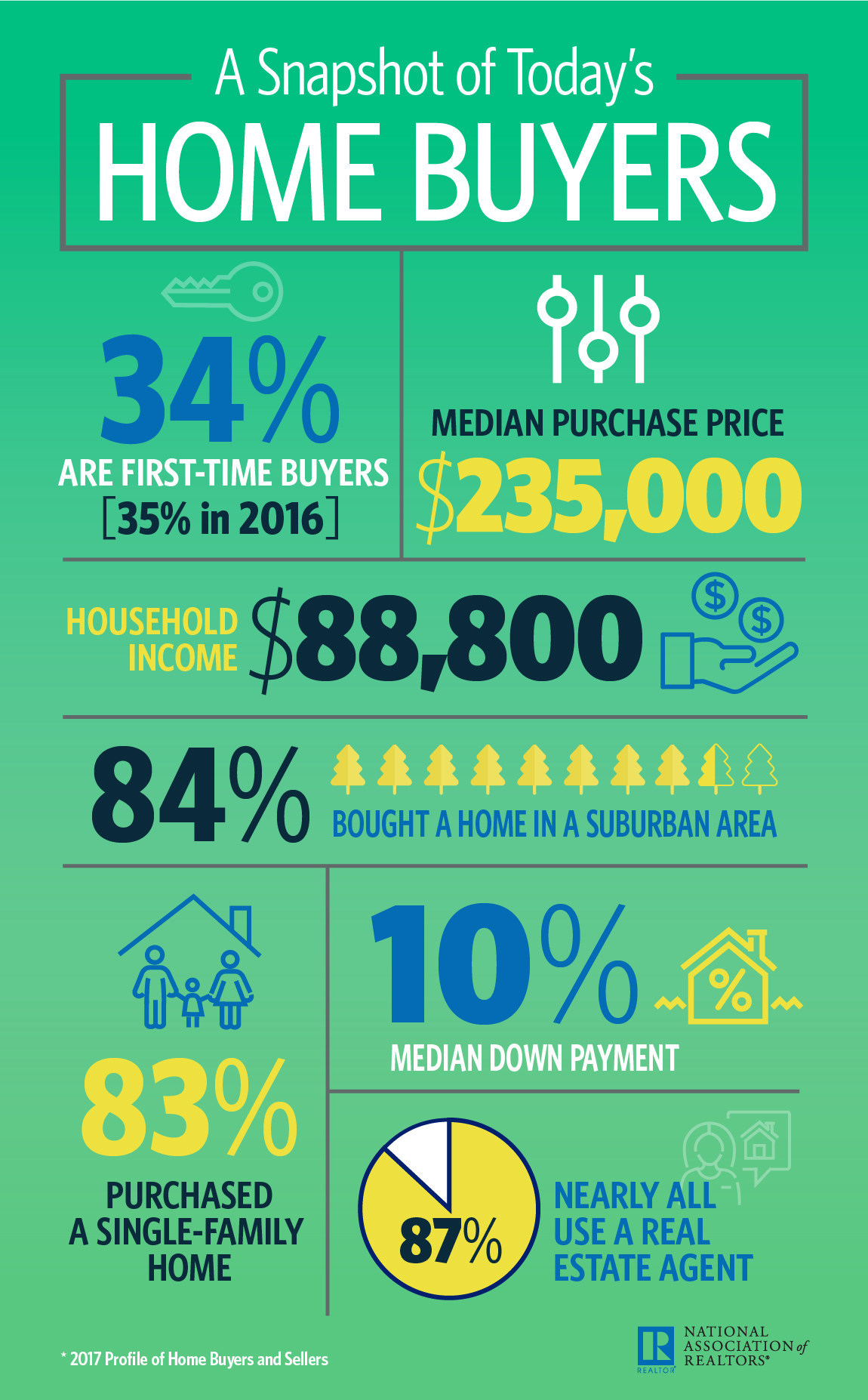
First-time homebuyers accounted for 34 percent of sales this year, less than the 35 percent share in 2016 and off an average 39 percent historically, the NAR 2017 Profile of Home Buyers and Sellers shows. First-timers bought costlier, but smaller homes than in 2016, at $190,000 and 1,640 square feet.

The kicker? Many first-timers are in a position to purchase, says NAR Chief Economist Lawrence Yun, but still shut out.

“The dreams of many aspiring first-time buyers were unfortunately dimmed over the past year by persistent inventory shortages, which undercut their ability to become homeowners,” Yun says. “With the lower end of the market seeing the worst of the supply crunch, house hunters faced mounting odds in finding their first home. Multiple offers were a common occurrence, investors paying in cash had the upper hand, and prices kept climbing, which yanked homeownership out of reach for countless would-be buyers.

“Solid economic conditions and millennials in their prime buying years should be translating to a lot more sales to first-timers, but the unfortunate reality is that the nation’s homeownership rate will remain suppressed until entry-level supply conditions increase enough to improve overall affordability,” says Yun.

Supply is so strained that 42 percent of homebuyers as a whole paid either at or over list price, the Profile shows.

“Many of those in the market to buy a home this year had little room to negotiate,” Yun says. “Listings in the affordable price range drew immediate interest, and the winning offer oftentimes had to waive some contingencies or come in at or above asking price to close the deal.”

There are factors in favor of first-timers. Homebuyers overall are having an easier time obtaining a mortgage, thanks to lenders loosening standards. Thirty-four percent of first-timers took out a Federal Housing Administration (FHA) loan, up from 33 percent in 2016.

First-timers are also benefitting from the expertise of real estate professionals. Eighty-seven percent of buyers overall relied on a real estate professional in their transaction.

“It’s no surprise a majority of first-time buyers indicated that the top benefits received from their agent were help understanding the buying process (83 percent), pointing out unnoticed property features or faults (60 percent), and negotiating better sales terms (51 percent),” says NAR President Bill Brown. “REALTORS® over the past year have helped buyers—and especially first-timers—navigate extremely competitive market conditions where the need to be prepared and act quickly has been paramount to the success of purchasing a home.”

There are hurdles. On average, first-timers made a 5 percent down payment, and 25 percent of them reported the most challenging aspect of buying a home was saving for it. The majority of first-timers accumulated a down payment on their own (with 50 percent taking a year or more), while some received a gift from a friend or relative.

Another snag? Forty-one percent of first-timers reported they have student loan debt, with more than half in for at least $25,000. Fifty-five …read more

From:: Real Estate News

First-Time Homebuyers Are Knocking: Are They Being Let In?

By Susanne Dwyer

First-time homebuyers are eager to enter the housing market. Getting in the door is another story.

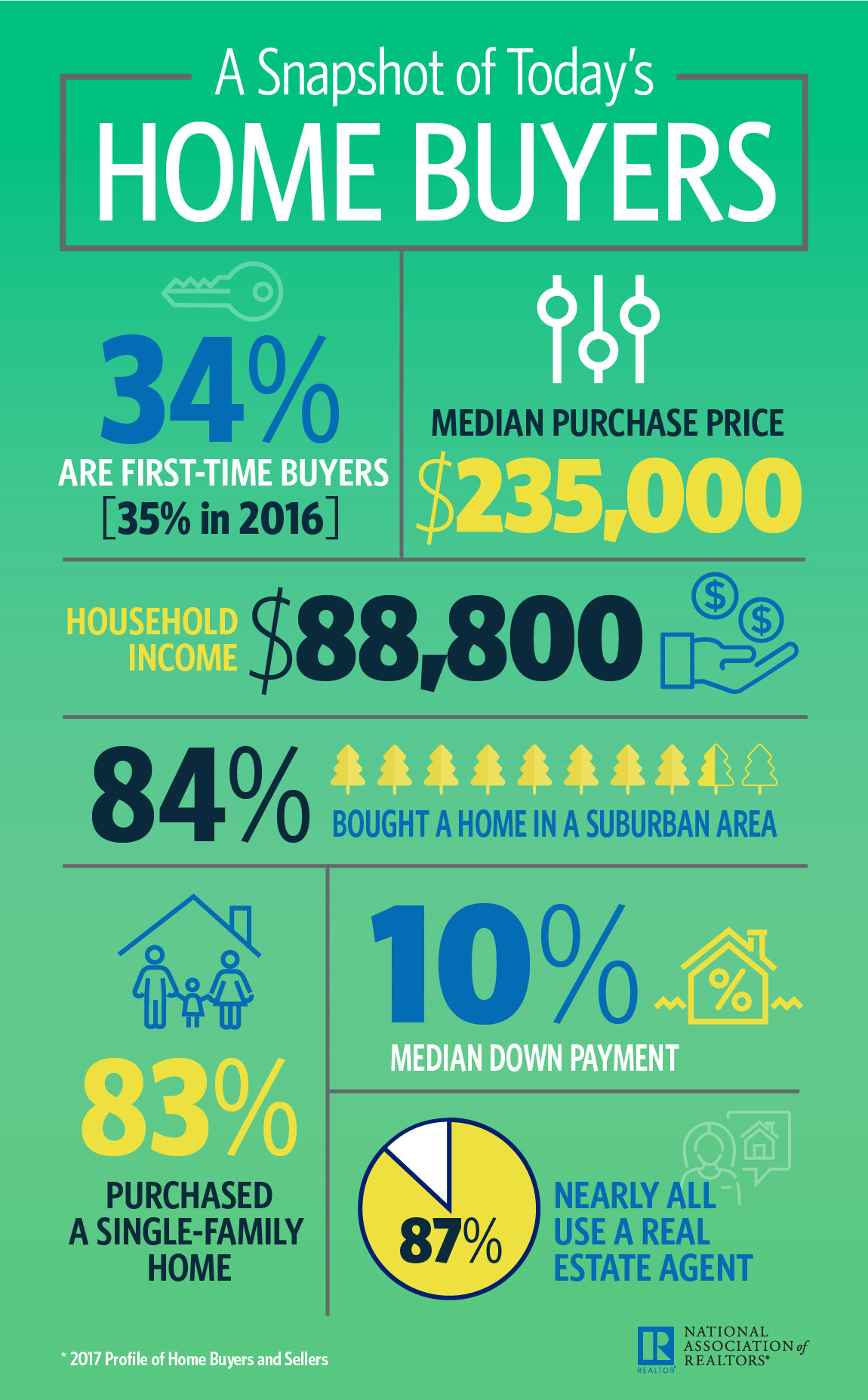
First-time homebuyers accounted for 34 percent of sales this year, less than the 35 percent share in 2016 and off an average 39 percent historically, the NAR 2017 Profile of Home Buyers and Sellers shows. First-timers bought costlier, but smaller homes than in 2016, at $190,000 and 1,640 square feet.

The kicker? Many first-timers are in a position to purchase, says NAR Chief Economist Lawrence Yun, but still shut out.

“The dreams of many aspiring first-time buyers were unfortunately dimmed over the past year by persistent inventory shortages, which undercut their ability to become homeowners,” Yun says. “With the lower end of the market seeing the worst of the supply crunch, house hunters faced mounting odds in finding their first home. Multiple offers were a common occurrence, investors paying in cash had the upper hand, and prices kept climbing, which yanked homeownership out of reach for countless would-be buyers.

“Solid economic conditions and millennials in their prime buying years should be translating to a lot more sales to first-timers, but the unfortunate reality is that the nation’s homeownership rate will remain suppressed until entry-level supply conditions increase enough to improve overall affordability,” says Yun.

Supply is so strained that 42 percent of homebuyers as a whole paid either at or over list price, the Profile shows.

“Many of those in the market to buy a home this year had little room to negotiate,” Yun says. “Listings in the affordable price range drew immediate interest, and the winning offer oftentimes had to waive some contingencies or come in at or above asking price to close the deal.”

There are factors in favor of first-timers. Homebuyers overall are having an easier time obtaining a mortgage, thanks to lenders loosening standards. Thirty-four percent of first-timers took out a Federal Housing Administration (FHA) loan, up from 33 percent in 2016.

First-timers are also benefitting from the expertise of real estate professionals. Eighty-seven percent of buyers overall relied on a real estate professional in their transaction.

“It’s no surprise a majority of first-time buyers indicated that the top benefits received from their agent were help understanding the buying process (83 percent), pointing out unnoticed property features or faults (60 percent), and negotiating better sales terms (51 percent),” says NAR President Bill Brown. “REALTORS® over the past year have helped buyers—and especially first-timers—navigate extremely competitive market conditions where the need to be prepared and act quickly has been paramount to the success of purchasing a home.”

There are hurdles. On average, first-timers made a 5 percent down payment, and 25 percent of them reported the most challenging aspect of buying a home was saving for it. The majority of first-timers accumulated a down payment on their own (with 50 percent taking a year or more), while some received a gift from a friend or relative.

Another snag? Forty-one percent of first-timers reported they have student loan debt, with more than half in for at least $25,000. Fifty-five …read more

From:: Finance and Economy

Double-Digit Growth in the Wild West: Is a Bubble Next?

By Susanne Dwyer

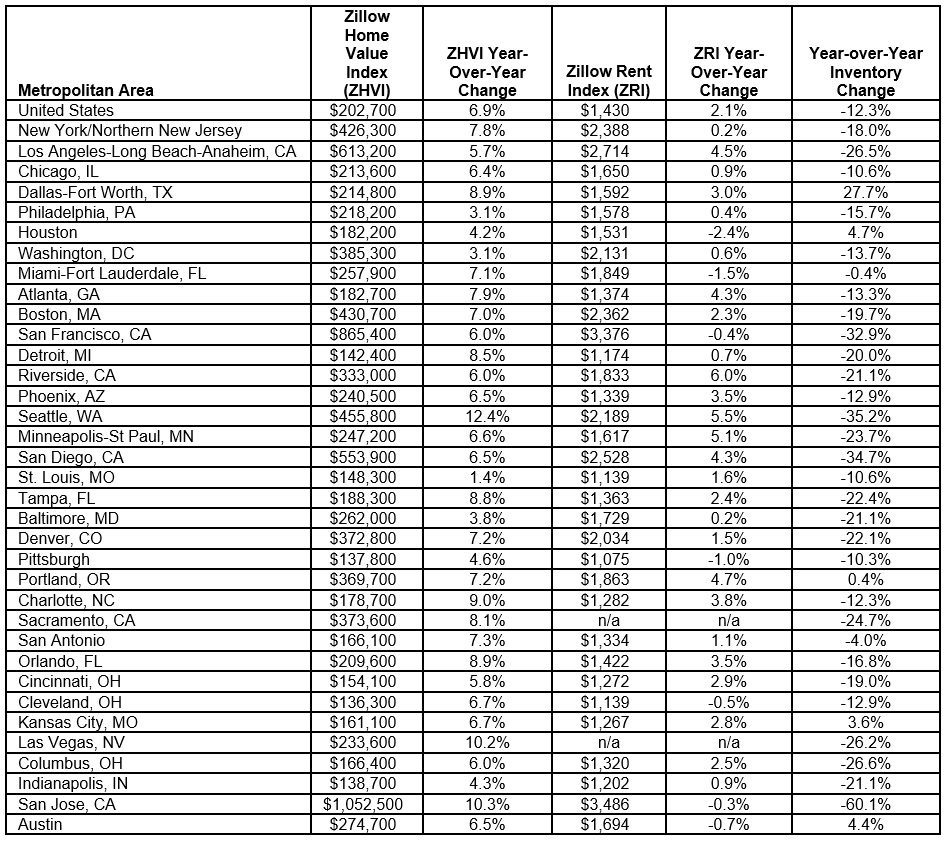
Zillow_Sept_17

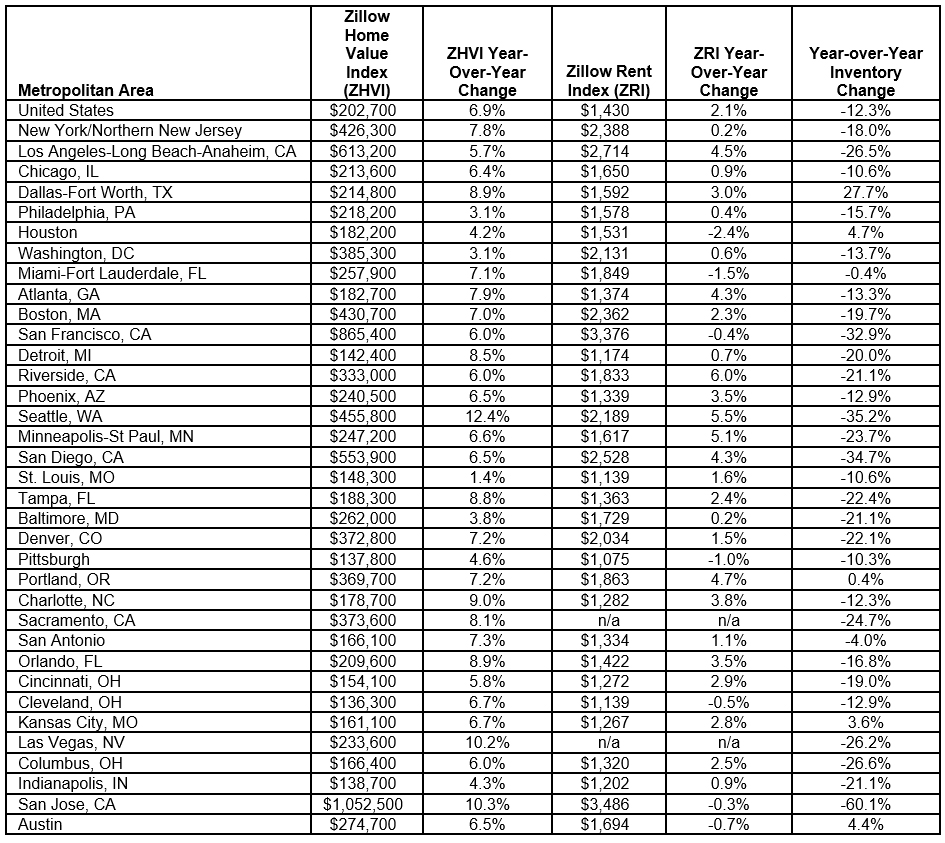
Demand is forcing home prices out West to keep ticking up, even though the home-buying and -selling season is winding down, according to the September Zillow® Real Estate Market Report. Appreciation is highest in the San Jose, Calif., and Seattle, Wash., metropolitan areas, where prices have rocketed (in order) 10.3 percent, to a median $455,800, and 12.4 percent, to a median $1,052,500, year-over-year. Appreciation nationally is 6.9 percent, to a median $202,700.

Rents out West are also on a swift upswing. Rents in Riverside, Calif. have climbed 6.0 percent year-over-year—the most of the metro areas in the report—to a median $1,833. Rents in Seattle have gone up 5.5 percent to a median $2,189; rents in Portland, Ore., have increased 4.7 percent to a median $1,863; and rents in Los Angeles, Calif., have risen 4.5 percent to $2,714. Appreciation nationally is 2 percent, to a median $1,430.

“In these West Coast markets, heightened demand is being met with limited supply of homes for sale, which naturally causes prices to rise,” says Dr. Svenja Gudell, chief economist at Zillow. “That limited supply and high demand dynamic is a widespread phenomenon impacting high-growth metros like Seattle, as well as slower-moving markets, like Indianapolis.

“It might be easy to assume another bubble is emerging, with home values growing 10 or 12 percent per year, but don’t worry—the market is reacting to basic economic laws, and is behaving exactly the way we would expect it to given good overall growth, limited supply of homes for sale and decent housing affordability thanks to low mortgage interest rates,” Gudell says.

Nationally, there are now 12 percent fewer homes for sale compared to one year ago, the report shows.

For more information, please visit www.zillow.com.

Suzanne De Vita is RISMedia’s online news editor. Email her your real estate news ideas at sdevita@rismedia.com.

For the latest real estate news and trends, bookmark RISMedia.com.

The post Double-Digit Growth in the Wild West: Is a Bubble Next? appeared first on RISMedia.

…read more

From:: Real Estate News

Double-Digit Growth in the Wild West: Is a Bubble Next?

By Susanne Dwyer

Zillow_Sept_17

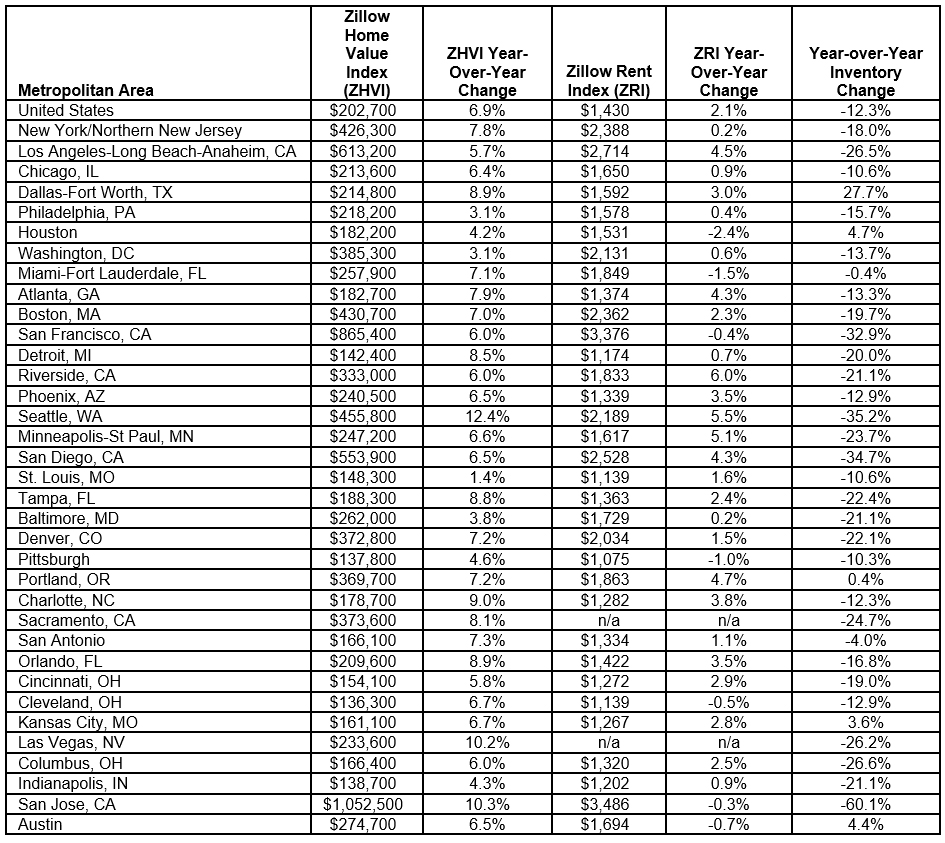
Demand is forcing home prices out West to keep ticking up, even though the home-buying and -selling season is winding down, according to the September Zillow® Real Estate Market Report. Appreciation is highest in the San Jose, Calif., and Seattle, Wash., metropolitan areas, where prices have rocketed (in order) 10.3 percent, to a median $455,800, and 12.4 percent, to a median $1,052,500, year-over-year. Appreciation nationally is 6.9 percent, to a median $202,700.

Rents out West are also on a swift upswing. Rents in Riverside, Calif. have climbed 6.0 percent year-over-year—the most of the metro areas in the report—to a median $1,833. Rents in Seattle have gone up 5.5 percent to a median $2,189; rents in Portland, Ore., have increased 4.7 percent to a median $1,863; and rents in Los Angeles, Calif., have risen 4.5 percent to $2,714. Appreciation nationally is 2 percent, to a median $1,430.

“In these West Coast markets, heightened demand is being met with limited supply of homes for sale, which naturally causes prices to rise,” says Dr. Svenja Gudell, chief economist at Zillow. “That limited supply and high demand dynamic is a widespread phenomenon impacting high-growth metros like Seattle, as well as slower-moving markets, like Indianapolis.

“It might be easy to assume another bubble is emerging, with home values growing 10 or 12 percent per year, but don’t worry—the market is reacting to basic economic laws, and is behaving exactly the way we would expect it to given good overall growth, limited supply of homes for sale and decent housing affordability thanks to low mortgage interest rates,” Gudell says.

Nationally, there are now 12 percent fewer homes for sale compared to one year ago, the report shows.

For more information, please visit www.zillow.com.

Suzanne De Vita is RISMedia’s online news editor. Email her your real estate news ideas at sdevita@rismedia.com.

For the latest real estate news and trends, bookmark RISMedia.com.

The post Double-Digit Growth in the Wild West: Is a Bubble Next? appeared first on RISMedia.

…read more

From:: Finance and Economy

Cray shares up 6% after third-quarter earnings and revenue beat

Cray Inc. shares rose in the extended session Monday after the company announced it beat Wall Street expectations on the top and bottom line. Cray shares rose 5.8% to $18.90 after hours. The super computer maker reported a third-quarter net loss of $10.2 million, or 25 cents a share, compared to a net loss of $23 million, or 58 cents a share, in the year-ago period. Adjusted losses were 33 cents a share. Revenue rose to $79.7 million from $77.5 million in the year-ago period. Analysts surveyed by FactSet had estimated an adjusted loss of 51 cents a share on revenue of $59.5 million. Wall Street models adjusted fourth-quarter earnings of 25 cents a share on sales of $194.4 million. Cray stock has fallen 8.3% this year, with the S&P 500 index rising 15.3%.

Market Pulse Stories are Rapid-fire, short news bursts on stocks and markets as they move. Visit MarketWatch.com for more information on this news.

…read more

From:: Stock Market News